
The Miller County Most Wanted Program
Miller County publishes no active-warrant roster, no warrant-photo gallery, and no most-wanted page. The Miller County Sheriff's Office page covers patrol, jail operation, court security, and processing court orders, but it links no named roster. Colquitt Police posts no most-wanted page either. There is nothing local to mirror or list here. What remain useful are the official contacts. The sheriff is the first call about a possible county warrant. The Superior Court and Clerk hold the court-record route instead. That division matters. One office serves process; the other keeps the case file. No anonymous reward program runs locally either, and any future Miller County roster deserves trust only if an official agency stands behind it with update details.
No Miller Roster Is Verified
Quick answer: A blank county website is not proof that no active warrant exists. It only means no official public list is posted.
A most-wanted feature is a publicity product, not the warrant database. Miller County can hold and serve plenty of warrants without posting a single name. An old post can also linger online after someone's legal status changes. For a real answer in Miller County, go straight to the sheriff, the issuing court, or the clerk who keeps the records. Private people-search sites stay unofficial no matter how boldly they label results Miller County. There is no local roster of names, photographs, or mugshots to browse. If an official Miller program appears someday, read its scope and let the government publisher control corrections and updates.
How the Lists Work
Where a most-wanted list exists, staff pick a handful of priority cases for public attention. The mix shifts with arrests, surrenders, recalls, and agency updates. Most active warrants in Miller County never earn a spot on one. A stale post can also stay up long after the warrant behind it changes status.
Program rule: A published list is a snapshot. Presence on it does not replace confirmation of current status, and absence from it does not establish that no warrant exists.
No Miller County source spells out selection rules or an update schedule, because no local program page exists. Habits borrowed from another county do not transfer. For current personal status, ask the sheriff or the issuing court. A public-awareness page is the wrong place for that answer.
GBI BOLOs Are State Programs
The Georgia Bureau of Investigation BOLO page is a statewide public-awareness channel. It is not a Miller County most wanted list. State notices serve the GBI's own investigations, while the local sheriff handles county warrant confirmation. Each question has its own office.
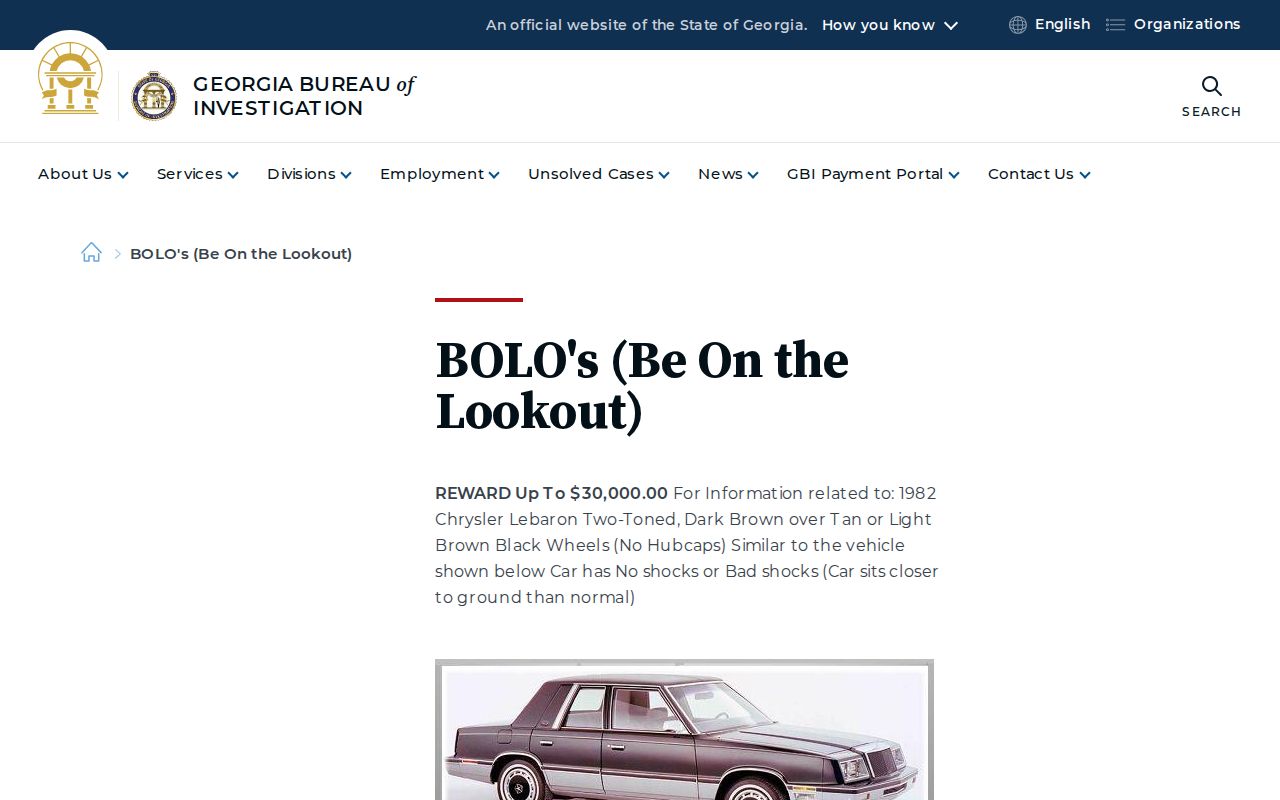
For live program material, use the agency's own page. Copying a notice elsewhere invites stale or wrong details. That holds for GBI notices and any future Miller County program alike.
How to Report a Tip Safely
Report through the agency's own channel. Immediate danger means emergency services. Georgia also offers an official tip application for qualifying non-emergency information, with the sheriff as the local law-enforcement contact. A tip route will not confirm your own warrant.
- Confirm that the tip page is an official government program and read what type of information it accepts.
- Provide concise facts such as location, time, and observed circumstances. Do not investigate or gather more information yourself.
- Do not approach, follow, detain, threaten, or announce the possible location publicly.
- Keep any reference number or program instruction provided by the official channel.
Safety first: Send information through the official agency and step back. Law enforcement decides whether and how to respond.
Georgia's Anonymous Tip Route
The GBI's See Something, Send Something program takes anonymous tips through an application and other listed methods. It gathers intelligence. It is not a public warrant search for Miller County or anywhere else, and a submitted name proves nothing about a warrant.
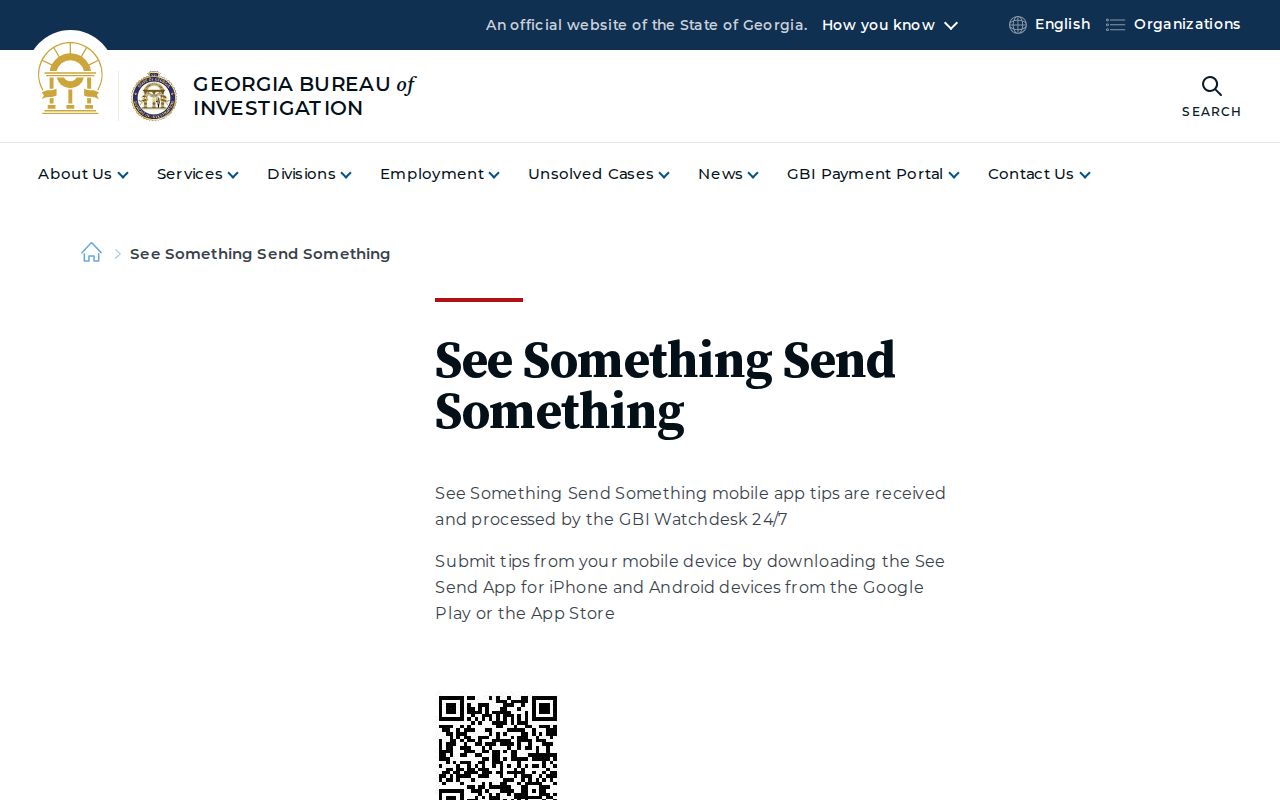
For Miller County law-enforcement business, the Sheriff's Office lists 229-758-3421 and an office at 300 West Pine Street. The official page promises no dedicated tip line, anonymity, or rewards. Claim neither perk locally.
Most Wanted vs an Active Warrant
Two errors cause most confusion here. One assumes every active warrant gets advertised in Miller County. The other assumes every public notice is still a live warrant. A list is a choice; a warrant is legal process whose live status only the issuing court can confirm.
| Feature | Most Wanted Program | Active Warrant |
|---|---|---|
| Scope | A selected public-awareness subset | Any warrant still legally outstanding |
| Publisher | An agency choosing to publicize cases | Held or acted on by the issuing court and law enforcement |
| Visibility | Public only if an official program posts it | May not appear on any public webpage |
| Current status | Can lag arrest, surrender, or recall | Must be confirmed through the responsible office |
| Miller route | No verified local roster | Sheriff or issuing court confirmation |
GCIC Is Not a Public Search
The Georgia Crime Information Center supports criminal-justice information for authorized agencies, including wanted-person data. It is not a public name-search portal. Calling it a statewide Miller County warrant lookup misstates both its access and its purpose.
Keep three layers separate: public BOLO and tip programs, restricted criminal-justice data, and direct sheriff or court contact in Miller County. None can substitute blindly for another.
If You Believe You Are on a List
Never settle your own warrant through a public tip form. Call an attorney. Identify the likely issuing court and confirm current status and procedure there. The sheriff can explain process. The court controls the case and its orders, and no Miller County source promises a surrender, bond, or recall procedure.
Important: Plan before visiting a law-enforcement office. An active warrant can result in custody, and an attorney can help confirm the record and discuss a voluntary response.
A stale public notice can mislead. When one looks outdated, contact the agency that published it and share the URL or post date. Only the publisher can correct or remove it. In Miller County as anywhere else, a photo dropping off a page clears nothing, and a photo staying up proves nothing about an active warrant.
Miller Most Wanted Terms
- Active warrant
- Judicial process that remains outstanding until served, recalled, quashed, or otherwise resolved.
- Most wanted
- A selective public program label, not the complete inventory of active warrants.
- BOLO
- A “be on the lookout” notice used to request awareness or assistance; it is not automatically a county warrant roster.
- Tip
- Information submitted to an agency for assessment, not a legal finding or status check.
- GCIC
- Georgia's criminal-information center serving authorized justice users, not an open public search.
Each request has its own lane in Miller County. Warrant confirmation belongs to the sheriff or issuing court. Official program tips go through that program's channel. Record copies go through the proper custodian under Georgia's records process.
Verify the Publisher and Date
Any most-wanted notice is only as good as its publisher. Check that the web domain or social account truly belongs to the named agency, look at the date the item was posted, and then follow the agency's own instructions. A search-engine excerpt can linger after the real page changes. A copied image may leave out a correction that came later. So treat neither one as proof of a person's current legal status. The publishing agency is the right source for that notice; the issuing court or sheriff is the right source for a question about your own warrant. Miller County's small size and one-city layout do not put everything in one spot. Colquitt Police, the Miller County sheriff, the county courts, the GBI, and federal agencies each work their own turf.
Miller Most Wanted Source Checklist
A solid reference to a Miller County most-wanted program names the agency behind the notice, uses an official government domain or verified channel, and points to the agency's own contact or tip instructions. It should also carry a publication or update date. If those pieces are missing, a copied post is not the county's official program.
- Use the county government sheriff page for the published local office contact.
- Use GBI pages only for the statewide BOLO, information-system, or tip function each describes.
- Use the issuing court or sheriff for current personal warrant confirmation.
- Use emergency services only for an immediate threat, not a routine record inquiry.
Miller County runs no warrant roundup, no amnesty program, no posted local reward amount, and no fugitive-of-the-week feature. Those gaps are facts about the county, not openings to borrow details from somewhere else. If a program shows up later, read its official terms and dates instead of assuming a standard model. And remember: a search excerpt or copied image can stay online after the source changes, so it cannot tell you a case's current status.