
Arrest Warrants in Miller County
Georgia gives the warrant decision to a judge, not to police or to websites. An officer or other authorized applicant lays out the facts, and the judicial officer weighs whether probable cause supports taking someone into custody. In Miller County, the Magistrate Court is the clearest place to start. Its published criminal work covers arrest and search warrant applications, warrant-application hearings, first appearances, bond proceedings, extradition, and committal proceedings. That court-signed order is what sets a Miller County arrest warrant apart from a mere tip or complaint, and law enforcement carries it out. For records, the Miller County Superior Court also states that it holds criminal cases and criminal warrants. So pick the office by what you need: current enforcement status points to the sheriff, while filings and copies point to the court that keeps the case.
Miller County Arrest Warrant Review
Magistrate Court sits in Courthouse Room 110, 155 South First Street, Colquitt. The office answers its public line at 229-758-4110 on weekdays from 9:00 a.m. to 5:00 p.m. Staff there can walk you through filing, fees, and record logistics for a Miller County warrant question. They cannot give legal advice. If you want to contest probable cause, seek recall, or arrange a surrender, take those questions to a lawyer. The court's official page posts the jurisdiction details and current contact block.
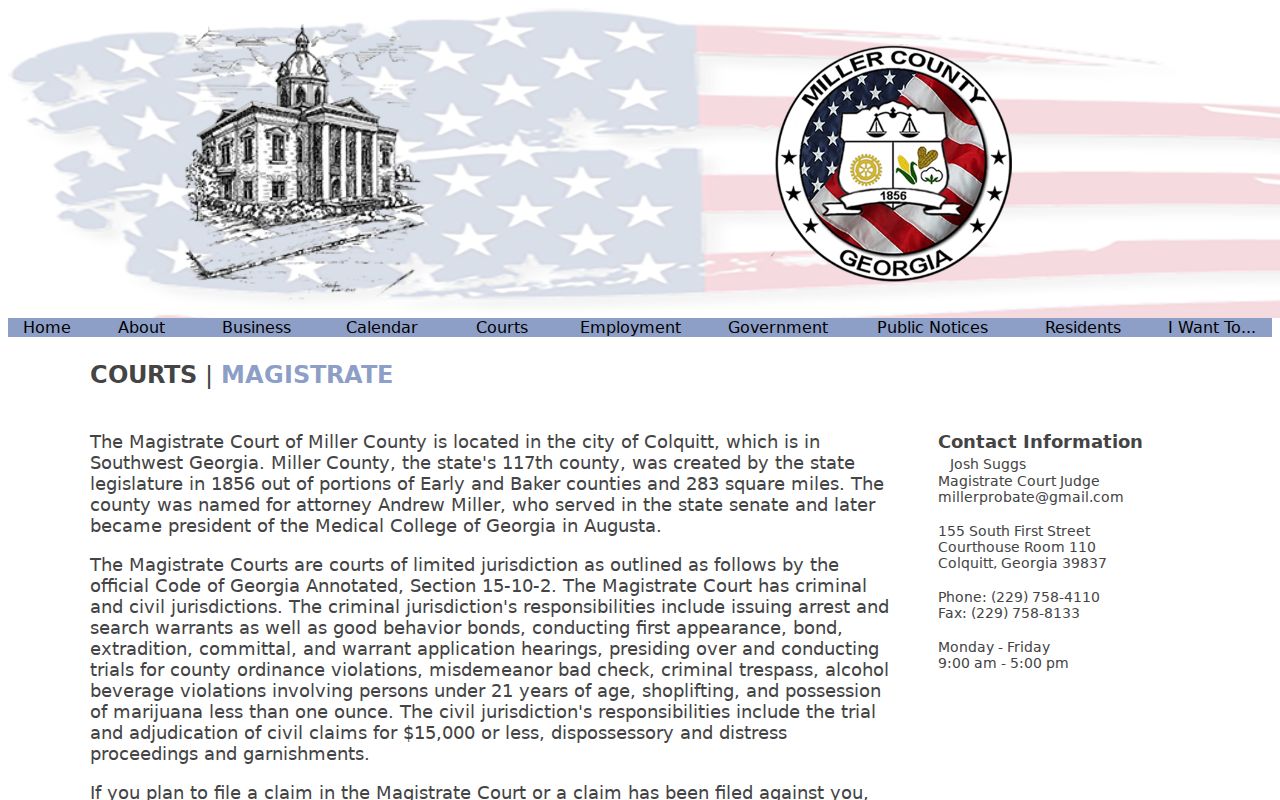
That page explains the judicial role behind a Miller County arrest warrant. It runs no live status search and shows no personal record.
Note: A warrant-application record may be restricted when sealing, investigative, or privacy rules apply.
What a Miller County Arrest Warrant Contains
A warrant document or its docket entry may show the process without every investigative detail. Miller County publishes no verified sample with a local numbering pattern, so treat any number format you see elsewhere as unconfirmed. A focused records request can still ask for the standard fields.
| Warrant or Cause Number | An identifier assigned by the court or system; no Miller format was verified. |
|---|---|
| Issuing Court | Magistrate, Superior, Probate, Municipal, or another authorized court. |
| Issue and Return Dates | Dates may appear if public and available. |
| Offense Description | The statute or charge, subject to sealed and investigative limits. |
| Applicant or Agency | The public agency involved, without private personal information. |
| Bond and Status | Labels may include secured, cash, recognizance, issued, served, returned, recalled, or quashed. |
A docket can list one case event while the sheriff's system holds a newer enforcement status. The originating record in Miller County controls.
Checking Miller County Arrest Warrant Status
The Miller County sheriff posts no public warrant portal, jail booking search, or public GCIC lookup. Work the official chain instead.
- Contact the Miller County Sheriff's Office at 229-758-3421 and ask for its current confirmation procedure. Ask whether phone confirmation is allowed or an in-person visit is required.
- For an application, first appearance, or bond procedure, contact Magistrate Court at 229-758-4110. For a criminal case or copied warrant, contact the Superior Court clerk at 229-758-4102.
- The clerk site links a case system, and Georgia Courts lists Miller through eAccess. Neither was verified as a public warrant status search, and the clerk link looped during research.
- For inspection or copies, send a focused Georgia Open Records Act request to the office that keeps the record. Constitutional-office requests go directly to the sheriff, clerk, Magistrate Court, or Probate Court concerned.
GCIC and CJIS exist for criminal-justice agencies, not public name searches. A blank web result never proves no Miller County warrant exists.
How Miller County Arrest Warrants Are Served
The sheriff's own page lists the department's work: enforcing federal, state, and county law, processing court orders, court security, patrols, and the jail. Those duties put the office at the center of warrant service in Miller County. The page names no separate warrant unit, no roster of officers authorized per process, no service map, and no after-hours warrant line. A return of service or executing-agency entry beats any broad assumption about status. The official sheriff page is the primary county contact.
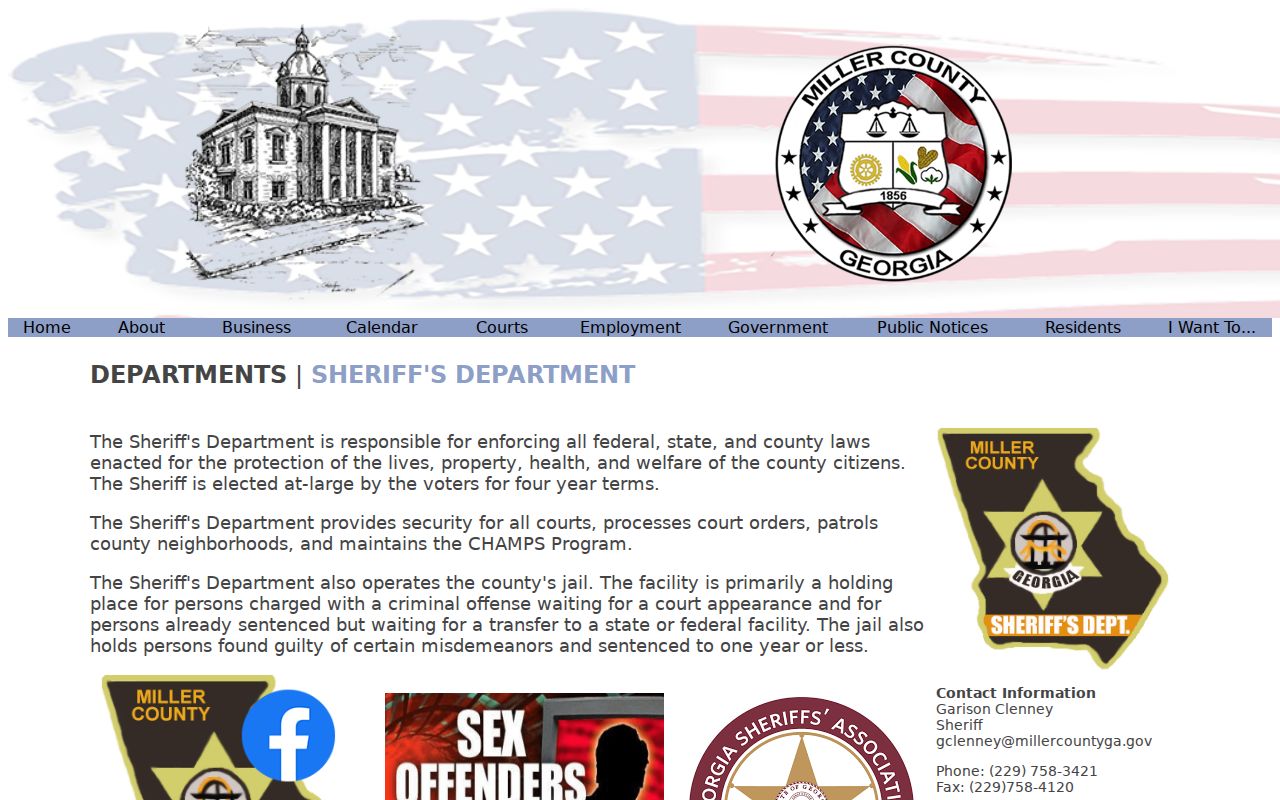
That mission makes the sheriff the first contact for service questions. Exact warrant status still comes from current office records. After an arrest, custody and judicial roles split. Magistrate Court handles first appearance and bond in Miller County. Georgia guidance says a person arrested on a warrant should generally get a first appearance within 72 hours, subject to the governing rules and circumstances.
Miller County Arrest Warrant Access Limits
Two different questions get answered here. Confirmation means asking whether the Miller County system still shows an open warrant and which office controls the next step. A records request is different. It asks for a document, a docket entry, a return, a policy, or a historical set. For the first, be ready to give identity information. For the second, name the office, the record class, the date range, and how you want access.
- Issued
- The court authorized the warrant; access and enforcement status still need confirmation.
- Served
- Law enforcement executed the process, though later events may sit elsewhere.
- Returned
- The process was reported back to court, with meaning controlled by the entry.
- Recalled or quashed
- The court withdrew or set aside process; the issuing court must confirm it.
- Sealed
- Access is restricted by law or order.
Access limit: Investigations, confidential sources, sealed papers, juvenile matters, and protected personal data may lawfully remain outside a public response.
Arrest Warrant vs Summons vs Bench Warrant
Each of these tools appears at a different point in a Miller County case. An arrest warrant rests on probable cause and puts a person in custody. A summons orders an appearance instead of an arrest. A bench warrant comes later, after someone fails to appear or comply.
| Feature | Arrest Warrant | Summons | Bench Warrant |
|---|---|---|---|
| Primary act | Authorizes arrest | Orders appearance | Authorizes arrest after a missed duty |
| Basis | Probable cause | Case proceeds without initial custody | Failure to appear or comply |
| Issuer | Judge or magistrate | Court or authorized officer | Judge handling the duty |
| Response | Confirm, seek counsel, arrange lawful response | Attend as directed | Contact issuing court |
For a missed court duty, see Miller County bench warrants. The actual order controls.
The 2025 Miller County Warrant Transfer
Miller State Court was abolished on January 1, 2025. Georgia House Bill 864 moved its cases around. Pending civil matters went to Superior Court. Criminal matters within Probate Court jurisdiction went to Probate Court, and other criminal actions landed in Superior Court. That matters because an old Miller County record, directory, or electronic label may still point to State Court. Date-check the record, then ask where the case now sits. The Superior Court clerk works from Room 103 at 155 South First Street, while Probate and Magistrate share Room 110. Georgia eAccess may still display Miller State Court, but that label alone cannot confirm an arrest warrant or show the former court still exists.
Note: Treat “Miller State Court” as historical or transitional unless a current official record explains custody after the transfer.
Bond After a Miller County Arrest Warrant
Miller County publishes no local bond schedule, so treat any figure you hear as unconfirmed until the sheriff or the issuing court states it. No set bond-window hours, payment list, surrender form, recall form, or warrant fee exists on the county level either. Statewide practice does allow several misdemeanor release forms: recognizance, unsecured release, cash, secured bond, personal surety, commercial surety, and property bond. Those are options the law permits, not promises about any one Miller County case. When you call, ask where first appearance happens, which court controls bond, and what conditions were set. Confirm accepted payment methods and whether a written surrender procedure exists. E911 runs a 24-hour dispatch service, but dispatchers handle emergencies, not records or bond questions. Routine inquiries belong with the sheriff or the issuing court.
What to Do If There's a Warrant for You
Start by confirming the Miller County arrest warrant with the sheriff and naming the issuing court. Be ready to say why you are calling. Is it warrant status, a record copy, bond procedure, or a missed court date? Ask what details the office needs and whether you must appear in person. Georgia guidance warns that an in-person inquiry can end in custody while a warrant is active. Talk with a lawyer before you pick a path. Counsel can advise on voluntary surrender, bond, and whether recall or quash relief fits your Miller County situation. Never assume a payment, a private database result, or a missing docket entry withdrew the warrant. Only written confirmation from the issuing court proves a recall or quash, and the sheriff can explain how status gets updated after that.
Important: Consult a lawyer before surrendering because an active Miller County arrest warrant may lead to immediate custody during law-enforcement contact.
The Miller County warrant records overview maps which office holds each record and how to resolve it. Follow the current court and sheriff instructions.